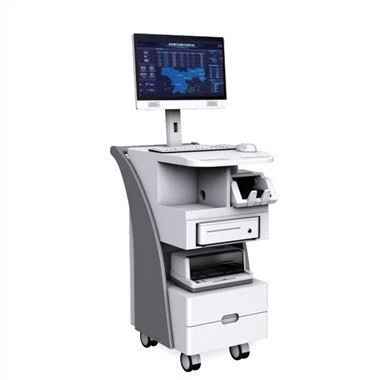
Touch screen product performance indicators include environmental guarantee, mechanical, optical characteristics, electrical characteristics, durability, and environmental reliability. There are certain performance indicators for each performance. According to the different integrated touch screen products, the performance indicators are also different. In addition, the performance indicators of the product are also different depending on the touch screen method. The example cited is the performance index of a resistive touch screen product integrated in FA machines, medical or industrial computers and other products.
In the environmental characteristics, there are indicators such as drive temperature range and storage temperature range. The -20 to 70 feet is the driving temperature range, and -30 to 80 feet is the storage temperature range. If it is a standard reliability specification, the drive temperature is 〇?50 feet, and the storage temperature is -20?651. If it is an automotive product, the reliability specification is stricter, the driving temperature range is -30 to 85T, and the storage temperature range is -40 to 95. In-vehicle products with touch screens occupy a large market. As mentioned earlier, the mainstream structure and manufacturing process are also different depending on whether it is an embedded type, a universal type, a matching type, etc.
Mechanical and optical characteristics mainly measure the action load and transmittance. The action load is a unique function of the touch screen, which refers to the degree of stress. Using silica gel (for example, the front end has a hardness of 60HS), the on-resistance is below 10kft. According to different recording methods, such as finger recording and dictation, the required values are also different. Written entry products have relatively low requirements on the action load.
The touch screen is usually set on the top of the liquid crystal display (the side that people can see), and the transmittance is a very important performance index. As a display device, brightness and contrast are the combined effects of the characteristics of the liquid crystal display panel and the touch screen. By setting the touch screen, the brightness of the LCD panel's backlight can be increased to compensate for the decreased brightness of the touch screen, so that the relationship between brightness and power consumption can be compromised. The measurement method is to use a halogen lamp as a light source, use a polarizer to convert it into a linearly polarized light source, and use a brightness of 550me as 100 percent to measure the transmittance. In addition, the optical characteristic indicators include reflectance, surface haze; surface hardness and other performance indicators will also be included in the range of performance indicators, which will be used on the upper substrate of the touch screen, which may be determined by the surface treatment performance of the laminated film.
The electrical characteristics of the touch screen mainly include resistance between terminals, insulation resistance, chattering, linearity, etc. One of the most important performance indicators is linearity. When the touch screen is touched, the actual detection position needs to be consistent with the touched position, but in fact there will be some deviations.
The ideal relationship between input voltage and output voltage is linear, but the actual output voltage often fluctuates. Introducing the concept of voltage linearity, that is, the value of the outermost voltage difference in the effective area divided by the maximum error voltage in a panel is called linearity.